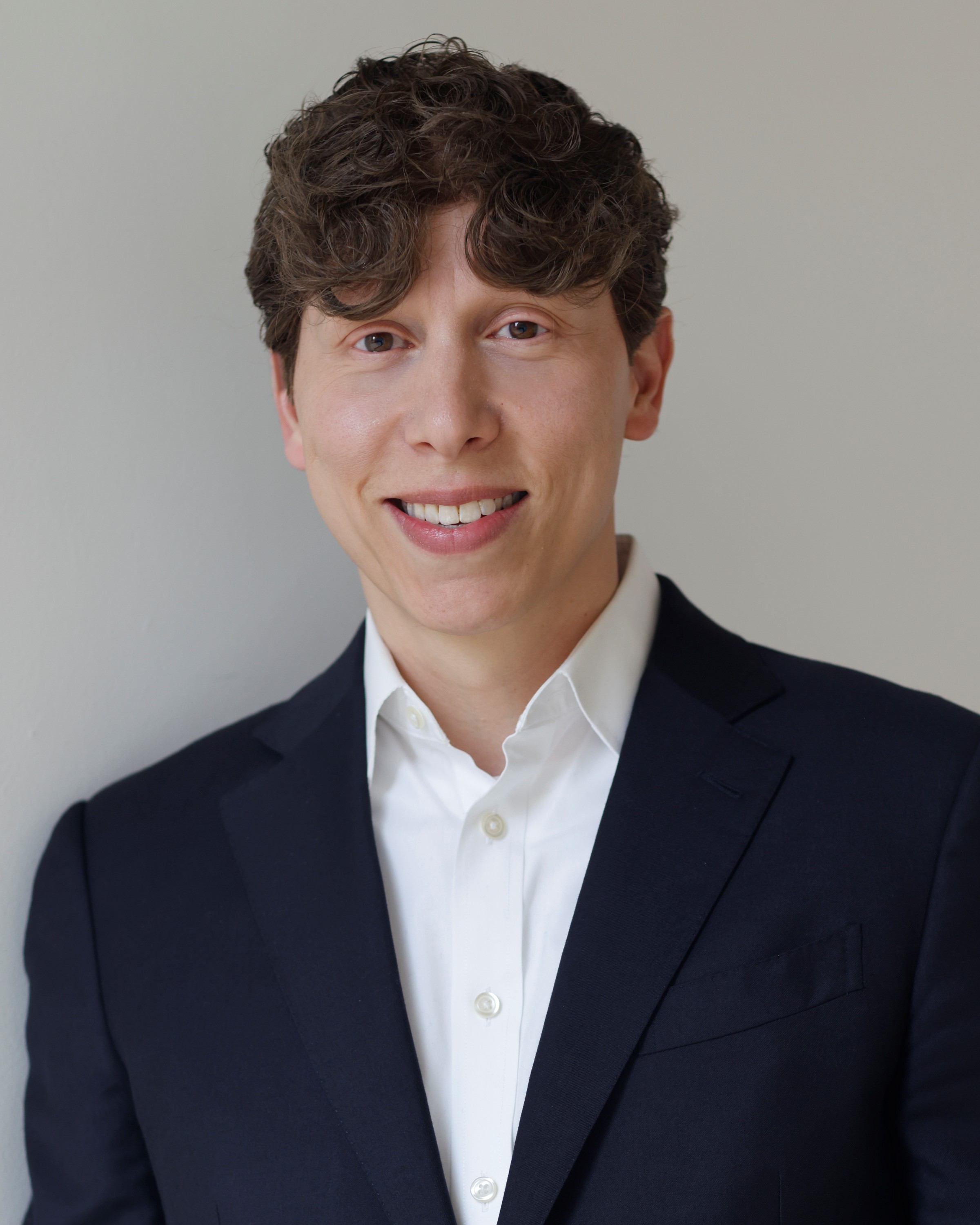
MARK: Hello, everyone, and thank you for joining this holiday webinar. My name is Mark Kiel. I'm the Chief Science Officer of Genomenon, and I'll be guiding our discussion on today's topic, When Every Patient Counts: A Fireside Chat on Literature-Derived RWE for Rare Indications. We will be discussing today real-world evidence (RWE) and the value that it provides, particularly for rare disease and precision oncology, and the underappreciated utility that the biomedical literature provides in that circumstance.
Before we begin, a couple of housekeeping topics. This webinar will be recorded and shared with all attendees after the webinar by email. After the presentation, there will be a Q&A session, so if any questions arise as we're discussing, please feel free to enter those into the Q&A chat function. During the webinar, you'll see a handful of poll questions that are relevant to the topics that are going to be discussed, and any insights that we gather as a result of your answers will be shared with you after the webinar. Lastly, as we wrap up, there will be a brief survey, which we value greatly, getting our audience's feedback on how we can better serve the community with topics and functionality. So before we begin, I'd like to spend a few moments describing Genomenon and the role that we play in providing real-world evidence for these rare disease indications.
First of all, Genomenon is a literature-derived RWE company, and we are applying both AI and expert curation to understanding the biomedical literature in order to power precision medicine. As a company, our mission is to save and improve lives by making biomedical information actionable. This comes in a couple of flavors. One is to help create precision medicines targeted at the molecular drivers of disease. The second is to help diagnose patients suffering with those diseases, where we have a particular focus and interest on rare disease and genetic disease, as well as precision oncology. This is the crux of the matter, and what my co-speaker and I will be touching on throughout the conversation is that there is powerful evidence hiding in plain sight in the biomedical literature.
This comes in the form of the patients' lives that are cataloged in millions of those articles and supplemental datasets. It comes in the form of case reports, talking about individual patients, pedigrees, families, and how they experience genetic disease, as well as case series and entire patient cohorts, both large and small cohorts. So all of those different types of studies are patterned in the clinical and biomedical literature. The individual data that comprise each of those cases and case series includes genetic data, such as the genetic variants that underpin that patient's particular disease, but also detailed information such as demographic data, the sex, the ethnicity, age, etc., the phenotypic data, how those patients presented to their clinician — useful information, particularly as you're trying to understand the presentation of, and/or heterogeneity of, rare disease or cancer — the laboratory values that attend the disease, and very importantly, the treatments that those patients received and their outcomes. So, collectively, this reflects many trillions of dollars of research and scientific and clinical inquiry for those real patients whose patient journeys are captured in those papers that are otherwise locked deep inside the medical literature.
At Genomenon, our approach is blended to apply two very complementary ways of extracting and understanding that information. The first is applying very sophisticated computation to find those data points and those terms and those descriptions of those patients, and use advanced AI capability to help understand how those individual entities interrelate with each other, but then to combine that with expert curation and scientific analysis. This is a very small fraction of our large curator and scientist team at Genomenon who help understand that data and make sure that it's not only accurate, but fit for purpose.
Why Genomenon? Just very briefly, we've spent a decade building that clinically-aware AI capability, and delivered value to many dozens of RWE programs to date by blending that proprietary clinically aware AI to extract real-world evidence from the literature. Then, the team of curators and scientists that we have, with great, vast experience in understanding that data and delivering value to those RWE programs, attend each of those deliverables.
I'm very privileged and pleased to have a guest speaker, a friend and colleague, Matthew Winton. Matt, if you could join the stage, I hope I don't embarrass you while I talk about you while your camera's on. Matt and I met each other while he was the Chief Operating Officer at Inozyme, where he led commercial readiness and supervised a lot of the activities leading up to the company's acquisition by BioMarin. He's currently the Chief Commercial & Business Officer at CervoMed, where he brings his 20 years of leadership experience across the scientific, commercial, and leadership roles there. He holds a PhD in neuroscience and an MBA in Health Sector Management. Matt, it's a great pleasure to welcome you to the stage.
MATT: Thanks, Mark. Pleasure to be with you today. Really interesting and important topic, and looking forward to the discussion. Thank you for having me.
MARK: Yes, I'm excited to chat. Before we begin, if you wouldn't mind going into some detail talking about your roles more than I described here, both at Inozyme and then what you're currently doing at CervoMed.
MATT: Sure. So as you mentioned, I've been in the industry 20 years now, across both clinical and commercial organizations, both large and small. I've worked in rare space, as well as larger, harder-to-treat indications, and have really been involved in trying to commercialize drugs, trying to make important clinical decisions to bring new novel therapies to market. In both of those cases, I think over the years, which has been consistent, is this need and this stronger focus on real-world data. As the industry has become more complicated, as there's additional competition, as science is really moving quickly, there's a lot of data out there that helps us make decisions. That is outside of the trial data, that is outside of the information that is generated by a company. In our partnership that we've had before, we've really found ways to identify some of that data, to use that data to make better, quicker, stronger decisions inside the company, but I think also you're starting to see now the acceptance of these new forms of data through greater understanding of big data, of AI models, from regulators and from payers. The power of the data that's out there has grown over the years. And it's not only for rare disease. I think you can use and implement some of these across broader, larger populations that really help you identify patient sets, help you answer difficult questions, and ideally bring better drugs or increase access for patients, which is really what we're all in this industry to do.
MARK: That's a great intro to the topics that we're going to touch on. You mentioned that there's increasing modes of accessing this data. Most of the time, when people hear about real-world evidence, their thoughts turn to the EHR, or claims or registry data. Can you give me a sense for why you think literature deserves a place in that set of potential resources for RWE?
MATT: Yeah, I think at the very simplistic, basic level, we all make decisions on incomplete data in this industry. That's our jobs. So, using more data or being able to access more data, I think, all makes us better in what we do. Claims data are very powerful, and they can help us understand a new indication, help us understand patients, that journey, cost information — but there are moments in time when they don't necessarily provide that second or third deeper layer, where literature can provide. I think in your introduction, you used the phrase "hiding in plain sight." I really like that, because there is a wealth of data that's out there in the literature, in publications, that can support or can fill gaps, that can provide additional color to the claims data. So, it's not an either-or, I really think it's an and. Putting those two together gives you a much more robust data set, or playing them off each other. Sometimes the claims data gives you questions to probe the literature on, and sometimes it's the other way around. The literature can give you new ideas and new questions which you didn't know how to ask, or didn't know you needed to ask, to go back to the claims, and therefore just build stronger data sets and fact bases to make decisions on your programs.
MARK: Yeah, we've seen that at Genomenon in practice. There's a complementarity to those different sources, there's different types of value that interweave with each other when you get your final output, and you pointed this out, quite rightly, you can use them in different cadences. One to inform the other, and vice versa, sometimes in parallel. Sometimes, one resource is sufficient to answer those questions, but maybe at a point in time in your program, and other times, you might need to turn your attention to a different source of RWE. Since we're talking about every patient counting, and we're particularly focused on rare indications (though it's applicable to common as well) can you speak to the challenge of getting a sufficient numerator from EHR for rare indications, where the denominator may be vast and the patient catchment for a source may be large, but when we're talking about rare and ultra-rare disease, that numerator might come up wanting?
MATT: Having worked in both rare and ultra-rare diseases, there's something special about this space. You're building data, you're working with communities that most of the times have not had therapy. A lot of these patients and families know more about the disease than their doctors. You can get really involved and make a big difference here directly from the patient. Those are all the wonderful things about rare and ultra-rare diseases. The flip side of that is the coding is not very good. There's probably lack of information, education that's needed. Sometimes, there's a lot of wrong diagnosis. You know, we all talk about the diagnosis odyssey in these patients, that could take six to seven years to get a true diagnosis, and they're going to doctor after doctor after doctor. There's a lot of heterogeneity in rare diseases as well. So, a lot of times, the claims unfortunately also reflect that, and make it very difficult. And if you only have 1,000, 5,000, 10,000 patients, if you don't have that homogeneous way to diagnose this, or if patients are showing up differently, in some cases, the patients aren't even getting the right diagnosis, it's really hard to only leverage the claims, because you're going to see that in the claims. I remember one of the diseases we worked on, we estimated a global patient population of around 10,000, based on the epigenetic work that we had done, which really confirmed that. The first time we looked at claims, I think we found 47,000 patients in the U.S. alone. That was clearly because there were errors in the claims, just because it was a rare disease, not a lot of information around it. But going back to the literature really helped us refine how we were thinking about the disease, how these patients were talked about, how they were presenting, which doctors were identifying them, what the patient journey was. It really gave us clues about what patients were looking like with our disease, and how the doctors, who would write in a lot of detail about their case studies, explained how this patient came to see them, how they were able to tease apart very complex symptomology to make a proper diagnosis. That led us to say, oh, well, maybe we're asking the wrong questions. Maybe we should expand or narrow our requirements for looking at the claims data. Then, you're able to make the necessary cuts, you're able to improve the effectiveness of your AI models, the robustness of your AI models, and that constant learning that you get from the literature really drove that. If we just took what we got from the claims at face value, we would probably say, okay, claims are not good, and we're done. But we got the claims to a point where they were really effective for us. Then you can actually go back and test those claims on known patients or known doctors that do have patients to make sure you're refining and improving, but without the literature, without truly understanding how these patients are showing up, where they're showing up, when they're showing up, what they're showing up with before they get a confirmed diagnosis — we would not have got there.
MARK: You mentioned a couple of words — the "completeness" of the data, and then you talked about the "clues." In the context of every patient counting, and the utmost importance of understanding your disease prevalence, getting as much of that information as you can and reconciling and making sense of it, I think, is really necessary to put those puzzle pieces together to really understand who you're looking for, how you're going to find them, and how many of them there are to find . I remember when you and I were going back and forth on one of these applications of RWE from the literature, which is prevalence estimation, the clarity that we got with more and better data was really essential. If you can expand on that, and then we'll move on to talking about additional applications of the literature in the RWE space for drug development.
MATT: Yeah. One point that I'll add to that is, the genetic component, or the mutation analysis understanding, especially in diseases that have multiple mutations that may lead to different forms of disease, really comes through in the literature more so than it may come through in the claims. As we were looking through the prevalence data to understand pathogenic, non-pathogenic, and understand which mutations could be drivers, how should we think about the diseases, and which types of genetic mutations we would want to include or not include… The databases are great, but sometimes they don’t move as fast as the literature. You want to make sure that there's a rigorous process to update a genetic database, and they have their rules and stipulations before they may change a designation of a certain mutation from non-pathogenic to pathogenic to a VUS or what have you. That takes time. Using the literature really helped us say, okay, well, we found five, six, seven, eight patients with this mutation. If we look at some of the databases, those literature haven't been uploaded, or the database doesn't reflect that, so we should include this in some of our prevalence calculations.
On the flip side, there are cases where, in the databases, they had examples of mutations that were considered pathogenic, but the literature maybe said something differently. There, you also have something that you don't have the ability to do in claims, especially when you're looking at prevalence. You have a name, and you have a researcher, and you have somebody who's on that publication. You have the physician who's seen that patient, who's done that work, that you can shoot an email, pick up the phone, and actually understand some of those questions, like, why are you seeing this? Or, you know, why is this different than what's reported? So it also kind of expands the realm of people that you can bring into the discussion and expand that tent, which, for rare diseases, because there's not one doctor that's going to see hundreds of patients, you know, every doctor who's involved in this is going to see a couple here, a couple there in most cases, even at the Centers of Excellence.
Using that literature to validate, to pressure test, to kick the tires a little bit, to take some data that was robust enough from the claims data, and take some data that we felt was robust and validated enough from the literature, and put those together to really make a focused and unique and specific model that reflected our disease and that reflected our needs, was critical. It wasn't cookie-cutter, it wasn't just using the claims database, and we took what we got. We really spent a lot of time defining our problem and the business rules, and how we wanted to ensure that the science was rigorous, and that the data that we were taking was effective. We were able to customize something that I think a lot of people sometimes don't feel is very customizable, and that's a very bulky claims database.
MARK: A couple things that you mentioned there, to touch on, is the traceability, or the provenance, that's effectively what the publication process is intended to do: document your data in as much detail as is permitted, and then be able to cite it, be able to know who did the work, who made those findings. Oftentimes, literature gets a bit of a bad rap for reproducibility. We have to segregate that from the basic science, which is on the bleeding edge and pushing boundaries, from the clinical science, which is cataloging and documenting with great rigor, as you mentioned. It's sort of protected in the literature from that reproducibility problem, because it's cataloging that information, and it's being done by the experts, as you said. So, in a way, there's a great benefit of having the literature come pre-vetted by those KOLs and those clinical experts who see these patients and are at the top of their game for these individual diseases.
MATT: Yeah, exactly. One area for us that was really helpful, like many rare genetic diseases, pediatric diseases, there's a high mortality rate within the first years of life. That was the case on the disease we were working on. 50% of patients, unfortunately, had a life expectancy of 6 months. But we didn't know which patients were in those 50%. And you can get that data and confirm that data through claims, through databases, but the literature, because they had validated mutation information, because they had experts also curious about that question of, is there any genotype-phenotype relationship? That doesn't show up in claims, but that shows up in the literature. That shows up in the discussions of these papers. That shows up in the validated records that many of these authors and physicians include in these case studies. That now lets you kind of take some of that data and continue that discussion. You also get some personal and maybe internal validation that these are critical questions that your stakeholders are also struggling with, or are also really curious to understand, that it's important for the field. That also is something that I think is really critical to the literature-based approach. This isn't just data for data's sake, this isn't, we're just running claims to understand more. You can truly say, well, this is an issue in the field,. This is something I know my KOLs are going to ask me about. This is something regulators are going to ask me about, because it's all over the literature. That kind of helps direct your time. We all are busy, we all have a lot of things we need to do, and so if you can prioritize which of those analyses are going to be important based on what the field and the KOLs in the field are talking about and reporting out in their data sets, I think that also is a very strong positive for literature in this sort of application.
MARK: Yeah, I like that. Just put simply, what's being done, and what's being found, what is the current clinical practice, and what tests are being run, or what clinical features are being assessed? And then, what is that spectrum of findings? The lab values, what's the range, the clinical phenotypes, how do they interact with each other in combination? You also mentioned — which is one of the questions that you got to before I even asked it, so very prescient — was how does the RWE from the literature help us better understand disease? You mentioned early lethality. In the disease that you and I worked on, there's a great spectrum of presentation, and there's a logical question to wonder about a genotype-phenotype correlation, but just getting that information and understanding that spectrum helps you better understand who to look for, how to look for them, and who's the most amenable to positive intervention with treatment.
MATT: Yeah, exactly. I mean, it's those nuggets, right? I think those nuggets don't exist anywhere else, and being able to get them from the literature or RWE is really powerful.
MARK: You also mentioned the genetic variant level, especially for many genetic diseases, there's a benefit in ensuring, for trials, for instance, that you have the right variants that are fully vetted, that have all the evidence necessary to indicate that they're pathogenic. It's a massing of evidence. There's variants of uncertain significance, that I'm sure the audience is familiar with if you work in genetic disease. I often say, if they're presenting in patients, there's a higher likelihood, obviously, that that VUS may be associated with disease causation, but if it's only seen in one patient, you might have to wait for functional studies or another patient or two outside of that family to corroborate that that variant causes disease. It's not just about making sure that all of the variants are there in your trial, say, or in your database of real-world evidence. It's also making sure that all the evidence is there, because that evidence collectively can inform changes in the calls, clarification of which variants do cause disease, and for which variants there's evidence that they don't cause disease. So, if you could speak to the use of that genetic data, the variant data, from the literature in informing trial design, say.
MATT: Yeah, and I think you're right. I think it's the right bifurcation. We want to make sure that if we are using certain genetic inclusion criteria in trials, that you do have the right documentation, that you have source data, that you can show, these are the right ones. You don't want to analyze the data, a year, six, two years, whatever it is later, and have people question, some of those genetic cutoffs or the inclusion criteria. I do think that makes complete sense, but if you put on your commercial hat, one thing that I've noticed is, and I'm sure most of the people watching today would agree with this: as companies develop drugs, as drugs go through trials, as there's more education, more information about them, the identification of these patients increases. The amount of genetic tests around some of these diseases increases, and this all results in more data. That data shows up in the literature first, before it shows up in the genetic mutation databases.
That's something that we worked on together, is, how do we continue to identify that growing data set of genetic tests? As a company, we supported genetic testing. It was very important. We supported newborn screening. You see across the globe, there's a lot of countries, there's a lot of hospitals, driving the push to get all newborn babies genetically tested. There's a lot more doctors that are using a genetic test, prices have come down. We're seeing it being reimbursed at a country level, at a state level. That wealth of genetic information is increasing. I think we had, initially, when we started working on this disease, tens of mutations that we were comfortable with calling pathogenic. By the time we had launched the Phase 3 trial, we had hundreds of mutations that we were comfortable calling pathogenic. That sort of progress.
Kudos to the teams that are working on driving that education and the adoption of this science, but that's going to take some time for the databases and for everybody to catch up. It doesn't mean it's not occurring, and I think by only focusing on static databases or databases that maybe are a little lagged, you're missing out on that. Literature, we all can go online, we all can go to PubMed, we all can do deep searches and find the newest, latest data that just came out. That currentness allows you to stay on top of the disease state and constantly have a view. Maybe even a view before other people in the space have that view, and that's sort of an advantage, for you and for the company to see a little bit in the future, so to speak, rather than looking in the past, which is a lot of the data that's already available.
MARK: You brought up newborn sequencing, which Genomenon has played a role in at the data level. It's a very promising endeavor, multi-country, multifaceted. There's a lot of ethical, legal, social implications, there's a lot of data concerns, there's a lot of medical tracking and documenting and treatment implications, but I think the future is bright for rare and ultra-rare disease. I feel like newborn sequencing programs will allow for earlier identification of those patients and a better understanding and better appreciation of how many patients there actually are with some of these ultra-rare diseases, making it more amenable to develop drug programs around those diseases for more efficacious treatment for otherwise unprecedented diseases, because of the challenges with the rarity of those conditions.
Stealing a question, I saw this come in from the audience: where in the drug development process is real-world evidence appropriate to use, most advantageous, and in particular, information from the literature? Maybe just keeping it simple as discovery, clinical phase and commercial phase.
MATT: In my opinion, I think it's a little bit all of the above. I've spent a stint in my career on the market access and pricing side, and I always relate RWE to that as well. There was a time where pricing was an afterthought, or market access was an afterthought, especially in specialty indication. They're never going to deny a cancer patient an expensive drug. Rare disease will always get covered. So we don't need to worry about that early on, and you see the industry, starting to incorporate access and questions around patient access earlier and earlier. What are the endpoints in our trials? How are we thinking about ensuring an expensive gene therapy is going to ultimately be able to get covered? Are there new models we should be talking about in terms of payment and access earlier on than right after Phase 3?
I think RWE is the same thing. Really early on in development, one of the diseases that we were working on, as you'll recall, there was a lot of information and knowledge about the infant form and the adult form. We had a question about what's happening when they're pediatric. They don't disappear. There was this whole other patient group, patient segment, that was presenting with different symptomologies that were described when they were infants or when they were described when they were adults. It turns out that population was an ideal population for us to run a trial on. We would not have identified that population unless we dug into the literature. We had seen that in some of our earlier clinical trial work that gave us the signal to say, huh, some of these patients that we've looked at in our natural history study, or in some earlier trials, we're seeing this presentation in a pediatric population that's not really documented anywhere else. But sure enough, the more we dug into the literature, we found 80 to 100 patients that had this documentation.
That's an example that really shifted our developmental thinking on where we should put our next trial and have the best chance of getting data that would help registration. When you think recruitment for these trials, so if you move now more into the clinical stage, understanding where these patients are, who are the doctors, what are the sites, a lot of the real world literature can clue you into some of this. They can talk about where these patients are hiding. We know rare disease patients, in a lot of cases, unfortunately, are hiding, and there's a lot of work to do patient identification and find these patients. The RWE really gives you a bit of a roadmap there, and can help you with that. And then, as you think commercially and start thinking about forecasts, and start thinking about penetration into different segments, and how do you sort of drive adoption of a new drug to patients, I think there's also potential there, as well. You're always going to get questions all through from regulators. "Tell me about this population," or "why do they present like this," or, "is there something that we know about the genetics that resolve this?" Just having that underlying, and being able to answer that is critical. One thing I learned early on in my career and being in rare disease is, you quickly have to become the expert.
And that, I think, is almost an expectation of patience, that the company's the expert. There's the expectation from the agency that the company's the expert. A lot of times, there's an expectation from physicians that you are the expert, because "I've seen 5 patients, or I learned about this disease in med school, or somebody told me about this once in a residency, but that's it." We're looking to somebody to help guide us. A lot of generating this data is the responsibility of the company to further the community, to further the understanding. I think that's something that should start early on when you decide to start a program in a specific rare disease, genetic or otherwise.
MARK: Yeah, we've had a number of engagements, both at the IND level, really understanding and cultivating the expertise in that rare disease, but then also proving it. Proving it with evidence as you're making these regulatory submissions, it's not just a superficial understanding of what you're treating and how you're going about it, but it's a real deep understanding. All the way to, as you had also touched on, when maybe if it's a commercial phase, you've got a successful drug on the market, is how to find more of these patients to maximize the utility of that drug that you've spent so long and so much effort building out.
Let's move on. We've got a good handle on the applications and the value of RWE, particularly from the literature. Let's talk about the challenges, because you mentioned going to PubMed. As a scientist, you and I both are familiar with going to PubMed to look for new insights and gather new information about your topic. When you're thinking about amassing RWE, that can be more challenging than leisurely, keeping abreast of the new publications and the new patients, and the new findings, but then, getting the historical data, amassing all that information, making sure you're not missing anything. Because as we said, one paper, one variant, one patient can be material for your submission, for finding all the patients to maximize the value of your drug. So, if you could speak to the challenges attending extracting that information from the literature that you've experienced, or that you've seen in our work, Genomenon can ameliorate.
MATT: Yeah, it's a great question, because like everything, there are challenges, and it's important knowing about those challenges before you get into the space. I won't date myself, but PubMed is fantastic. I remember going into the stacks and having to pull journals and photocopy, or request interlibrary loans.
MARK: Oh, me too.
MATT: So, huge advancement there, but it's still not automated. It's still one by one. I think that that is where Genomenon's expertise and some of your tools have really helped, because it allows us to use AI, it allows us to do broader searches, do that first cut, rather than having our medical teams go paper by paper and search by search. I think it's a great test case for AI. There's a great way to pull the initial batch of papers, to have somebody go through and not to spend days, weeks, months just searching paper after paper. A lot of this literature is not all in one spot, and it may be talked about a little bit different. Unfortunately, it's not going to all have the exact same title that you want, or it's going to be readily available. A large percent is going to be, but there's gonna be a percent of data that is deeper in some of these publications, or maybe part of a broader publication. It may not be readily available just from a title search.
Over time, when you start seeing that, you can build models to help identify the right publications. Some of the authors who may be consistent across some of the publications is extremely helpful. The time saved, and I think the sanity of the medical team doing this, was, I think, saved by the expertise and sort of partnering with the people who know how to do this and have some of these tools to be able to, where it's possible, to speed things up, or to automate these processes. Obviously, you're going to have to go through at some point and kind of go paper by paper, and so it is a time-consuming process. But if you can take a lot of it off in terms of getting that first set of publications to look through, I think that's critical.
The other thing in terms of risks or challenges, and maybe not so much a challenge, but a critical thing to consider: in the literature, the upfront planning and the upfront discussions, are so critical. If you get those wrong, there's a risk that you could go on a bit of a wild goose chase. That's the business rules, that is defining what you're looking for in the data, that is to know what is gonna be considered in play, or what's already validated, and how are you thinking about which data you're going to use, how do you incorporate or evaluate the data? Having those things all set up up front and everybody agreeing on those also makes the process a lot easier so you're not building the boat. If you see a piece of data, you're like, oh, this is really good, and we want to fit it in, but if it's not at the same level of scrutiny, or if it doesn't meet those defined, rigorous scientific rules that you've put in place, you're not always trying to chase other pieces of data. You know, okay, this is not gonna meet our needs, and we move on. To me, that's also critical, really mapping out what is going to be the core of the analysis. I think that also helps with — it's almost like a SAP for a clinical trial. Having your rules up front so that you're not, you know, tweaking or sort of being opportunistic with the data you're looking for. That also helps maintain a high level of rigor, which would allow outside agencies and stakeholders to appreciate the data.
MARK: Just reflecting on your answer there — Yes, I too went to the stacks. That dates me. But I've also done this curation work myself, obviously, when I was in training in molecular pathology practice, but then, at Genomenon, myself, I have a great deal of respect for what the curators bring, the tedious, rigorous, scientific and clinical scrutiny that they bring to understanding this. As you just said, there's opportunity costs for principals at pharma and biopharma companies. This isn't what they do regularly. They have other things to do. Having a specialty group with AI capability to make sure that it comes quickly and comes comprehensively, but then a curation team to make sure that it comes accurately and is appropriate for what the downstream business needs are, I feel like that's where a lot of the magic happens.
We're coming up on time. I have been pilfering questions from the audience members. You touched on AI. This is a question, it's a broader question. What do you think AI technologies can bring to bear here to advance RWE? And what do you think the role of the human, the human-in-loop, which is a common trope in AI, but what do you think AI can do for RWE, and what do you think the continued role for humans in interpreting and understanding that data will be?
MATT: Yeah, it's a great question. It's a big question, so I'll do my best to try to answer it. I think, realistically, no matter how good they are, and I agree with you, the curation teams and the medical teams that we all work with are always fantastic in developing the processes to identify these publications. But the pace at which science is moving now, it's almost impossible for anybody to keep up. You get the updates in your emails, and it's even impossible, with that, to keep up and to read every publication. If you were expecting somebody to do that, that would be their full-time job for 10 years, right? And we know we're never going to get approval to kind of do an exercise like this if you say, well, I'll get back to you in in 2035 with an answer. So I think there, there's a great benefit from AI, from going from tens of hundreds of thousands of articles down to a manageable set. We know, here's the package of articles that we think are critical.
Where I think the human then comes in, is — AI is great, but there's nuances. There's expertise, there's just having done this before. You can pick up tricks or truly understand and maybe make a decision on some of those business rules. Sometimes it can be a little gray. I think having a human on the end of those decisions is helpful. That partnership of using AI to streamline, to prioritize, to assist, great. But then having truly somebody who knows this data and has the expertise to sift through it is necessary, because I think the other part about the literature, RWE, is sometimes you didn't realize there were questions you should be asking that you're not. If you just let AI model do that all for you, there's a lot of information that you're gonna miss. I do think having the human at that point is helpful.
I think also, AI is great, but I think sometimes the "so what" and how you translate the data into usable actions, how you take the data and those learnings, and go to the head of the group or go to the management team or go outside to the agency, and say, so this is what it's telling us, and this is what it means, and this is why we did A, B, and C — that, right now (and maybe we'll get there) is still better done from a human than done from AI. That partnership is huge. Being able to find, I'll put in quotes, "shortcuts" through AI, where appropriate, all for it, and I think more companies should do it, but still, there's a need for that medical experience, curators and experienced geneticists, to help sort through some of that data.
MARK: Yep. Still a place for us.
MATT: Still a place for us for now.
MARK: And that's a great way to end. That's a central thesis of Genomenon's operations and the value that we provide, is marrying the computational with the curation and the analytic that's coming from human experts. So, thank you. We're coming up at time here. Thank you so much, Matt, for sharing your anecdotes and your insights. I very much appreciate it, just like I appreciate every conversation I have with you. This happened to be televised. Thank you for spending the latter part of the morning here with us. For the attendees, just to close out here, a reminder that there will be a survey when we adjourn. We'd appreciate your feedback. It's very valuable to us, and a reminder that the recording will be emailed to you. I thank you again for all your kind attention, and Matt, for sharing the morning with me.
MATT: Yeah, thanks, Mark. Happy holidays, and to everybody at Genomenon, and everybody at the phone. Alright, take care.
MARK: Bye.